Caring Across Continents
THE HOPE CENTER’S NEW WORKFORCE PROGRAM SHOWCASES THE TALENT, COMPASSION, AND PROFESSIONALISM OF REFUGEES AND IMMIGRANTS AS EMPLOYEES
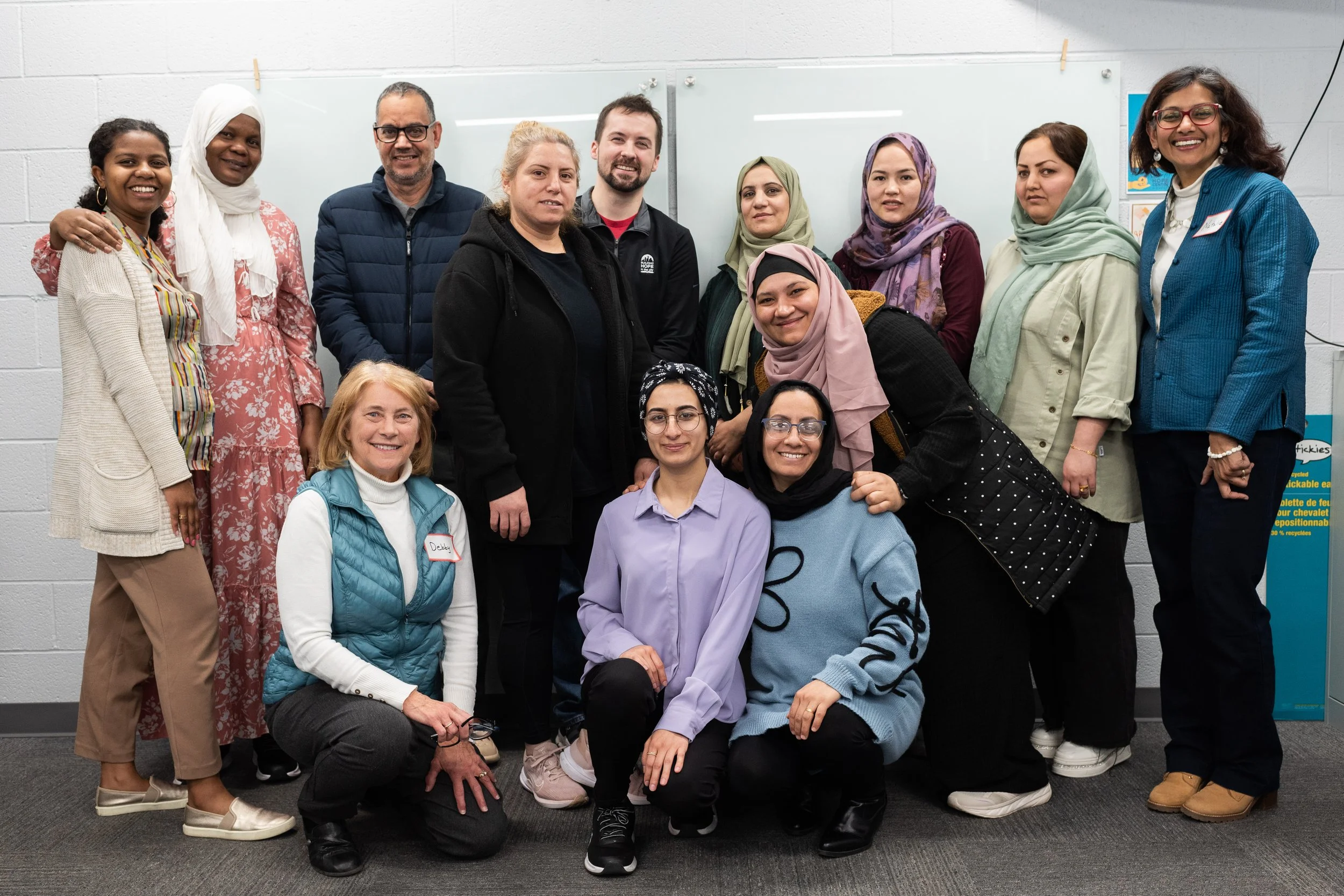
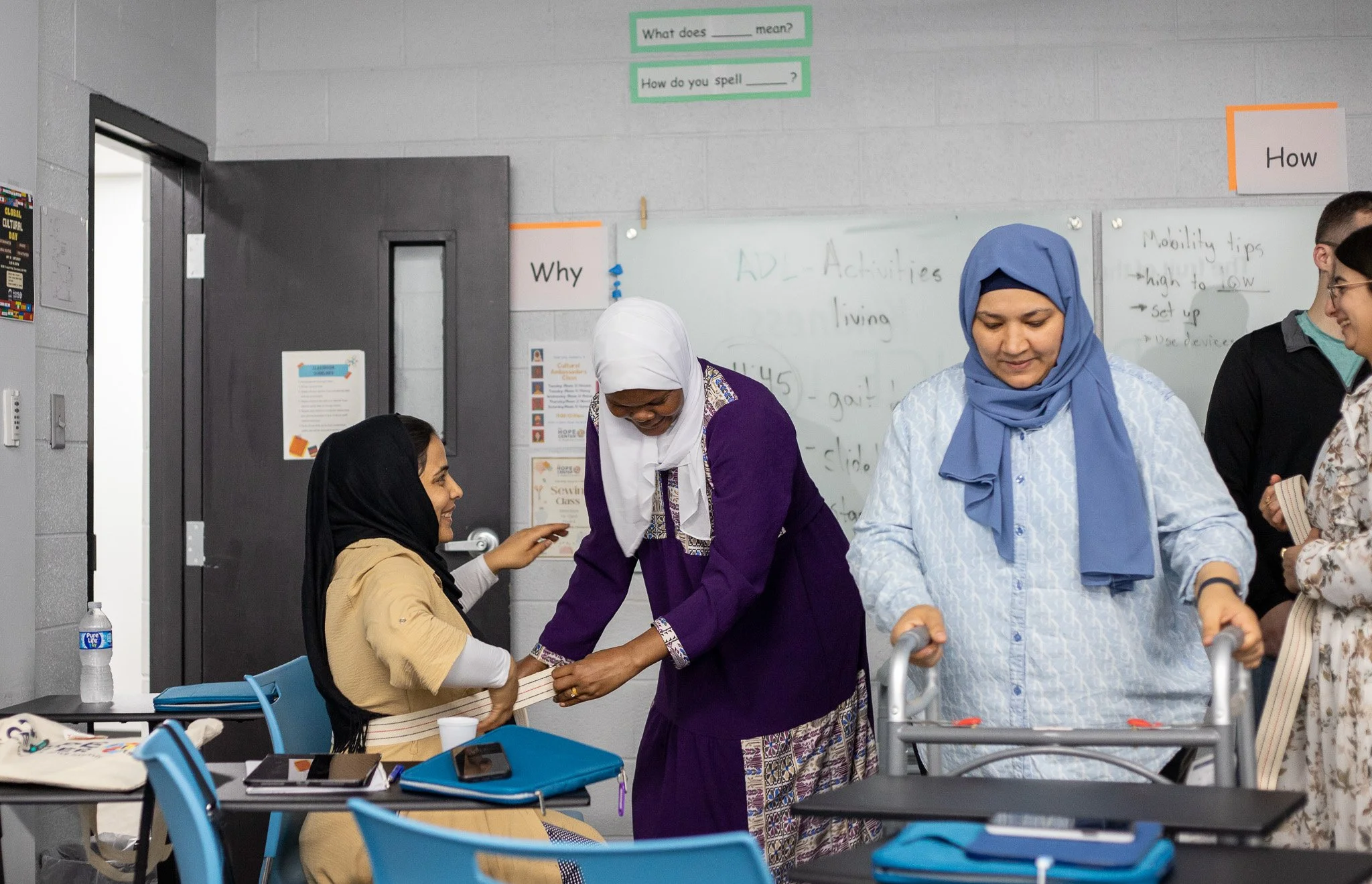
After celebrating their graduation in August, the first cohort of students from The Hope Center’s new Caregiving Workforce Development Program are now turning their training into meaningful work across Cleveland’s healthcare sector. As certified Direct Support Professionals (DSPs) in Ohio, these nine graduates qualify for higher wages compared to typical home health aids. The three-month program was created in partnership with Rising Heights, a nonprofit that provides integrated housing and care for neurodiverse individuals.
Rising Heights Executive Director Natalie Leek personally knows the resilience of immigrants and refugees. Her mother’s family was displaced from Pakistan. The strong family values instilled by her grandfather helped them survive unimaginable instability. Those same values later shaped her mother’s decades-long caregiving for family members, including siblings with developmental disabilities and a father with dementia. This convinced Natalie that immigrants and refugees carry the empathy and steadfastness that make them among the most qualified caregivers.
As the parent of a 13-year-old son with disabilities, Natalie has also witnessed specific gaps in disability resources. Early on, her son Craig spent some time in a resource room. “What we found out was that being with all these kids with such different, more complex needs regressed him,” Natalie shares. “If he’s around typical people, he thrives. He comes in and wants conversations, and he’ll say things we didn’t even know he knew.”
Debby McClain, Rising Heights Board President, is also a supporter of BHITC. She played a key role in connecting the two organizations. By bringing their respective strengths to the table, the partnership was able to flourish. Rising Heights helped develop a robust curriculum with input from parents, while The Hope Center recruited refugee and immigrant students to participate in the program.
One of the program’s graduates, Mohammad Hashim Halim, now serves as a DSP, offering one-on-one care and support for Natalie’s son, Craig while also working with Welcome House, an area agency running group homes for persons with intellectual and developmental disabilities. “We learned from the experience and just talking with Mohammad and hearing his story that he has so much to offer,” Natalie shares. “He comes with so much joy, and he’s uplifted. Having someone with so much positivity trickles down to our son and they genuinely enjoy their time together. Craig loves being around Mohammad and asks, ‘When is he coming back?’ when he’s not around. And Mohammad has shared that being with Craig is like taking care of his own son.”
Other graduates have secured positions in local hospitals, bringing valuable experience from their home countries to new workplaces. For Parwana Rajabi, who worked in pediatric nursing for eight years in Afghanistan, the transition has been fulfilling. She now works as a Clinical Technician in the pediatric emergency department at Cleveland Clinic Fairview Hospital. “I’m so excited! Not just me, but my husband and family are very happy,” Parwana shares. “I can start my career here in the U.S.” Parwana credits The Hope Center with helping her navigate the transition. “My teacher, Josh, helped me apply for the job,” Parwana shares. “Two other students in the class got jobs at Cleveland Clinic before me. They helped me prepare for the interview and job.” Looking ahead, Parwana hopes to become a registered nurse once she completes the additional education and training required.
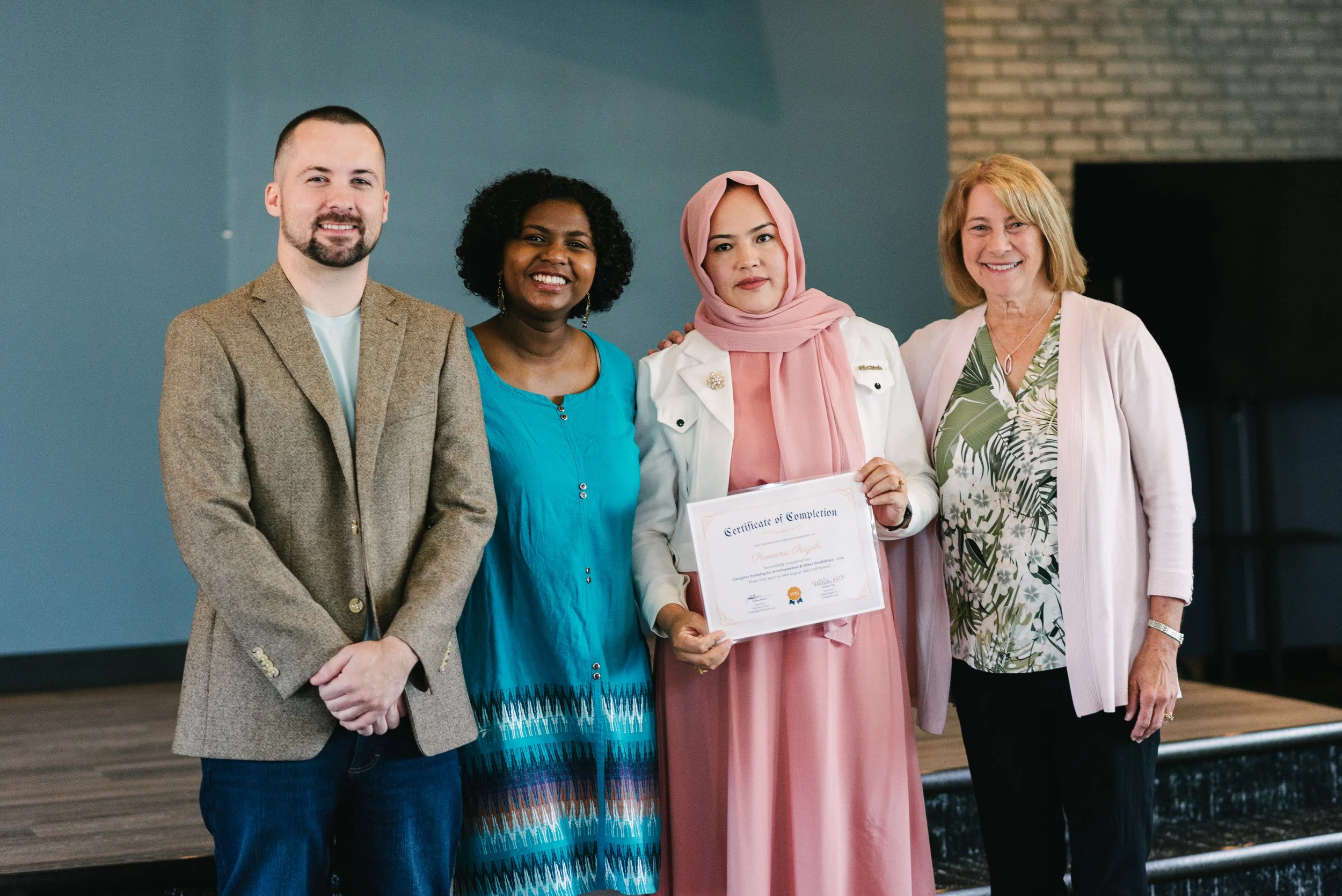
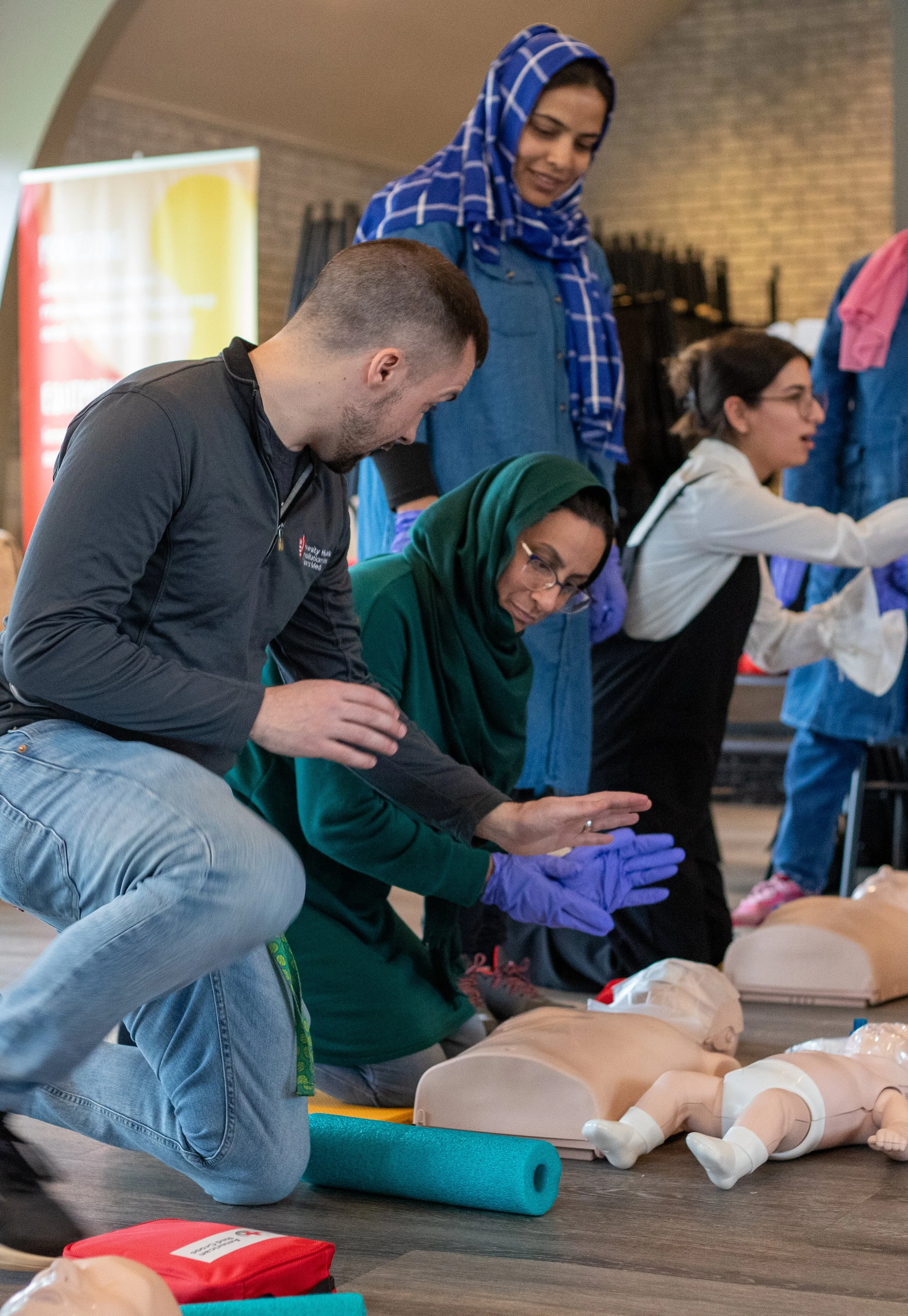
Parwana at the Workforce Development Cargiving Graduation alongside her supporters from The Hope Center, including teacher Josh Kontur
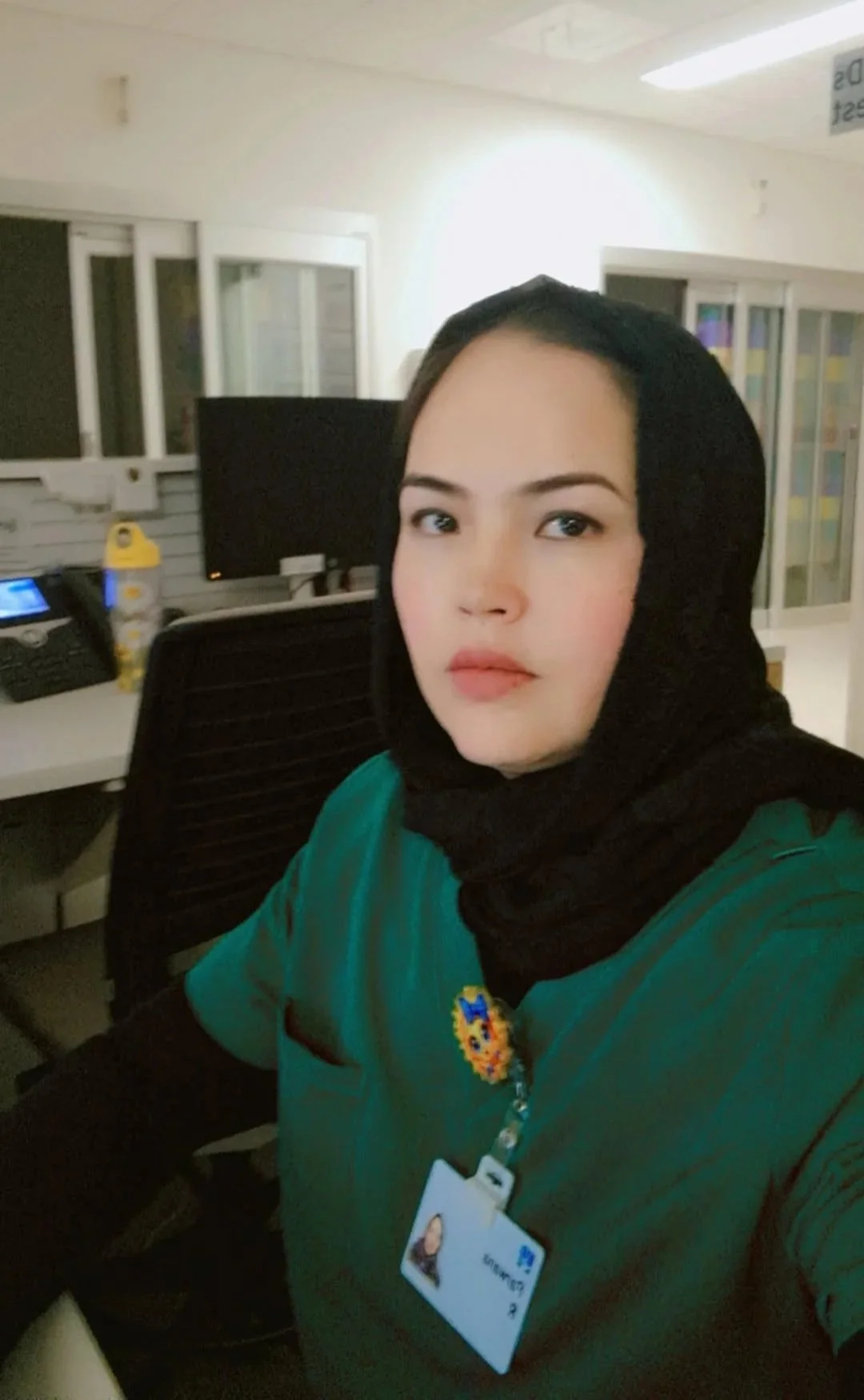
Parwana on the job at Cleveland Clinic
Zohra Sediqi Haseem, who previously worked at the same hospital as Parwana in Afghanistan, is one of the students now working at Cleveland Clinic. In the U.S., their paths crossed again through The Hope Center’s Caregiving Workforce Development program.
The Hope Center’s Josh Kontur, Manager of Workforce and Employment at The Hope Center, was thrilled to help create and teach the class. “I am moved by the stories, the resilience, the kindness, and the hope that these graduates show,” Josh shares. “They will continue to make our community a better place to live as they start healthcare careers here.”
The Hope Center plans to welcome a new cohort of students to this workforce program next spring. After sharing the success of their first cohort, The Hope Center and Rising Heights are expanding the program to reach a larger population of refugees from the Refugee Services Collaborative. In a field facing ongoing staffing shortages, both the graduates and incoming students represent the power of a new workforce filled with hope.